SCADA systems for oil and gas: monitoring, control and security
Sielco Sistemi —
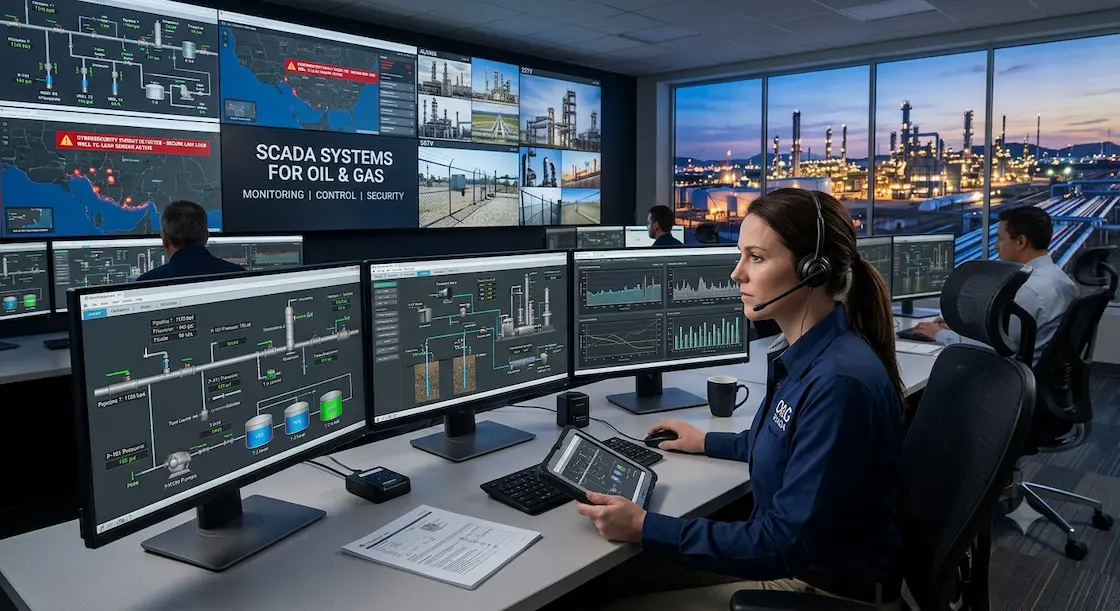
The oil and gas industry operates across widely scattered assets, from wellheads and pipelines to storage terminals and processing plants, often in remote or hazardous locations. SCADA systems for oil and gas give operators a single point of visibility and control over this distributed infrastructure, collecting field data, raising alarms and issuing commands to pumps, valves and compressors from a central control room. Winlog Evo, the SCADA/HMI platform developed by Sielco Sistemi, is used throughout this guide as the reference SCADA for describing how monitoring, alarming, reporting and integration come together in oil and gas operations.
Remote monitoring and control for oil and gas
An oil and gas SCADA platform must supervise assets that are frequently unmanned and dispersed over large geographic areas, from onshore well pads to offshore platforms and cross-country pipelines. Telemetry links field instrumentation, remote terminal units and PLCs back to the control room over radio, satellite, cellular or leased-line connections, so operators can watch flow rates, pressures, tank levels and equipment status in real time without dispatching a crew to every site. When a well stops producing, a compressor trips, or a pipeline pressure drifts outside its normal range, the system flags the change immediately rather than waiting for the next scheduled inspection.
Beyond passive supervision, remote control lets authorized operators start and stop pumps, open and close valves, and adjust setpoints from a central location, cutting response times and reducing the need for personnel to travel to hazardous or hard-to-reach sites. Winlog Evo supports this model with a configurable HMI and a web-based client that lets engineers review live and historical data from any location with a browser, which is particularly valuable for oil and gas operators managing assets across multiple regions or time zones.
Alarms and operational security for oil and gas
Because oil and gas facilities handle flammable and toxic materials under pressure, alarm management is not just an operational convenience but a core part of process safety. A well-designed alarm strategy in Winlog Evo prioritizes events by severity, groups related alarms to avoid flooding operators during upset conditions, and keeps a complete history of every acknowledgment and response, so incident investigations can reconstruct exactly what happened and when.
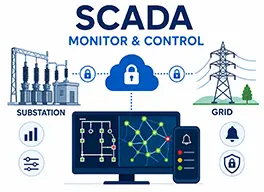
Operational security adds another layer of protection: distributed oil and gas sites depend on remote connections for maintenance and diagnostics, and every one of those connections is a potential entry point if left unmanaged. Winlog Evo SecureBridge lets engineers and integrators reach field controllers without exposing SCADA servers directly to the public internet, closing off one of the most common attack paths against industrial networks. Following the risk-based practices described in the NIST SP 800-82 guide to industrial control systems security helps oil and gas operators segment networks, restrict remote access and prioritize hardening where it matters most.
Reports and process traceability
Regulatory reporting, environmental compliance and internal audits all depend on accurate, traceable production and process data. Winlog Evo logs process variables, alarms, operator actions and setpoint changes to a relational database, so plant managers can generate production reports, downtime analyses and compliance summaries directly from historical records rather than reconstructing events from scattered logs or manual notes. This traceability matters across an industry that follows engineering and safety practices developed by bodies such as the American Petroleum Institute, where documented, auditable process data supports both regulatory submissions and internal quality reviews.
Structured reporting also supports operational decisions, not just compliance: trend analysis of flow, pressure and temperature data over weeks or months helps engineers spot gradual equipment degradation, optimize pump and compressor scheduling, and validate that production targets are being met consistently across every site. Because Winlog Evo stores this data in a standard SQL database, reports can be scheduled automatically or built with familiar business intelligence tools, giving oil and gas operators flexibility in how traceability data is consumed across engineering, operations and management teams.
Integration of plants and sensors
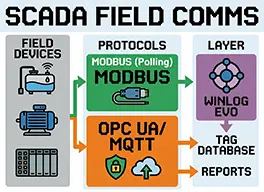
Oil and gas sites rarely run equipment from a single vendor: wellhead instrumentation, flow computers, tank gauging systems, compressor controllers and third-party PLCs often come from different manufacturers and speak different protocols. Winlog Evo integrates this mixed environment through a broad library of communication drivers covering standard industrial protocols, so field sensors and controllers can be brought into a single supervisory system without replacing existing instrumentation.
This integration extends to legacy industrial control systems already installed at older facilities, letting operators modernize the visualization and reporting layer while keeping proven field hardware in place. Consolidating data from wellheads, gathering stations and processing units into one Winlog Evo project also simplifies engineering: a single set of alarm rules, historical trends and access permissions can be applied consistently across a whole production area, instead of maintaining separate, disconnected systems for each site or asset type.
Ready to see how Winlog Evo supports oil and gas operations end to end? Try the Winlog Evo web demo, review the available communication drivers, or contact Sielco Sistemi to discuss your project.
FAQ
- What does a SCADA system do for oil and gas operations?
- A SCADA system such as Winlog Evo collects field data from wellheads, pipelines and processing units, displays it on a central HMI, raises alarms on abnormal conditions and lets operators remotely start, stop and adjust pumps, valves and compressors across distributed oil and gas sites.
- How does remote monitoring reduce risk on unmanned oil and gas sites?
- Remote monitoring via telemetry links flags abnormal pressure, flow or equipment status changes immediately instead of waiting for a scheduled visit, letting operators react before a minor deviation turns into equipment damage, a spill or a safety incident at a remote, unmanned location.
- Why is secure remote access important for oil and gas SCADA?
- Distributed oil and gas assets rely on remote connections for maintenance and diagnostics, and an unmanaged connection is a common attack path into industrial networks. A module like Winlog Evo SecureBridge lets technicians reach field controllers without exposing SCADA servers directly to the public internet.
- What kind of reports can a SCADA system generate for oil and gas compliance?
- By logging process variables, alarms and operator actions to a relational database, Winlog Evo can produce production reports, downtime analyses and compliance summaries directly from historical records, supporting regulatory submissions, environmental compliance and internal quality audits.
- Can a SCADA system integrate equipment from multiple vendors on the same oil and gas site?
- Yes. Winlog Evo integrates mixed-vendor instrumentation, flow computers, tank gauging systems and PLCs through a broad library of communication drivers covering standard industrial protocols, bringing sensors and controllers from different manufacturers into a single supervisory system without replacing existing hardware.