SCADA applications in industrial sectors: examples, benefits and monitoring goals
Sielco Sistemi —
A SCADA system (Supervisory Control and Data Acquisition) is the backbone of modern industrial monitoring, giving plant managers a single, real-time view of production lines, machinery, and energy flows. From ceramics kilns to dairy production lines, from electrical substations to food safety checkpoints, SCADA applications now span virtually every industrial sector. This guide walks through why companies adopt supervisory control platforms, and shows practical examples of how a modern solution such as Winlog Evo is applied to production, quality, maintenance, and energy management across different industries.
Why SCADA is used in industrial sectors
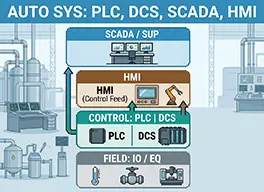
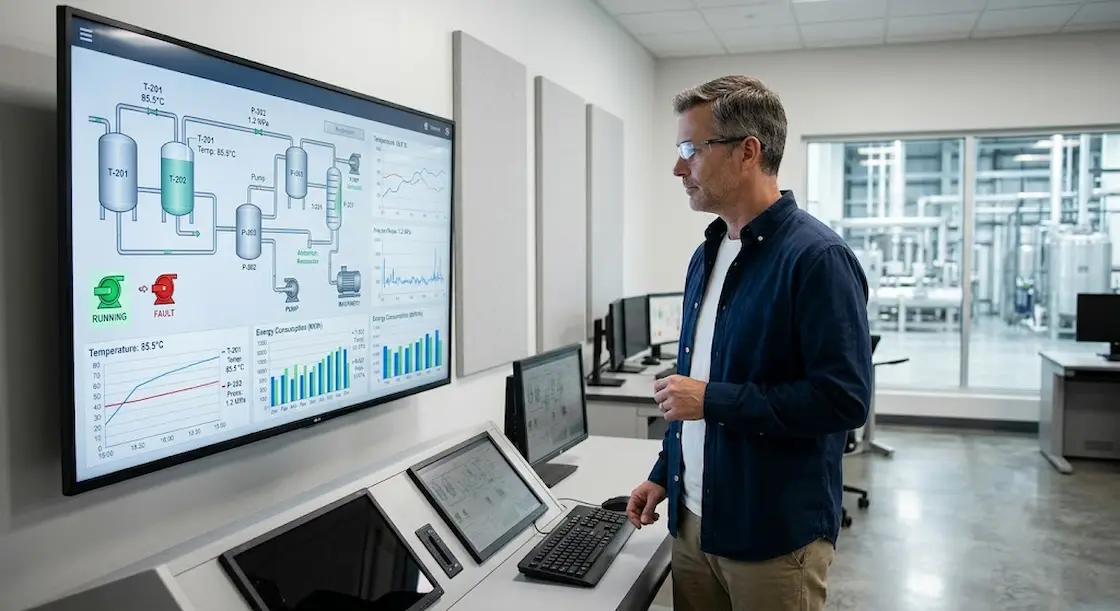
Industrial plants generate enormous volumes of operational data every second: temperatures, pressures, flow rates, electrical loads, machine states, and alarm conditions. Without a centralized system, this data remains scattered across isolated devices and PLCs, making it difficult to spot inefficiencies or react quickly to faults. A SCADA platform solves this by collecting field data through industrial protocols, displaying it on intuitive synoptic screens, and triggering alarms the moment a parameter drifts out of range.
The primary reasons industrial sectors adopt SCADA include:
Real-time visibility. Operators can monitor an entire plant — or multiple remote sites — from a single control room, reducing the need for manual inspection rounds and cutting response times when anomalies occur.
Process optimization. Historical trend analysis and reporting tools help engineers identify bottlenecks, reduce energy waste, and fine-tune setpoints for better yield and consistency.
Regulatory compliance and traceability. Many industries, particularly food and beverage, pharmaceuticals, and energy, must document process parameters for audits or certification. A SCADA system with automatic data logging makes this traceability straightforward.
Predictive and preventive maintenance. By continuously tracking equipment behavior — vibration, temperature, running hours — SCADA software can flag early signs of wear, allowing maintenance teams to intervene before a breakdown halts production.
Remote and multi-site management. Modern platforms like Winlog Evo support web-based access and mobile notifications, so plant managers can supervise geographically distributed assets, such as electrical substations or water networks, without being physically on-site.
These benefits explain why SCADA and HMI software has become standard equipment not only in heavy industry but also in mid-sized manufacturing plants seeking to modernize their operations through digitalization and Industry 4.0 initiatives.
SCADA applications for production, quality and maintenance
The versatility of a SCADA platform means it can be configured for extremely different production contexts. Below are some concrete examples of how supervisory systems support production, quality control, and maintenance across key industries.
Energy and electrical network supervision
In power distribution, SCADA is used to monitor substations, transformers, and switchgear in real time, detecting overloads and voltage anomalies before they cause outages. Energy cost monitoring modules also help industrial users track consumption by department or machine, supporting energy efficiency programs and cost allocation.
Ceramics and heavy manufacturing
Ceramic kiln supervision is a demanding application: temperature curves must be tracked precisely across multiple firing zones to guarantee product quality and avoid costly batch losses. A SCADA system logs every thermal profile automatically, giving quality teams full traceability of each production run.
Food, beverage and dairy production
In food and dairy plants, SCADA supports quality control by continuously logging pasteurization temperatures, cooling cycles, and cleaning-in-place (CIP) parameters — data that is essential for hygiene certification. In ice cream and dairy production specifically, supervisory software tracks mixing, freezing, and storage temperatures to guarantee product consistency batch after batch.
Heat treatment and metal processing
Processes such as carburizing, tempering and hardening require tight control of furnace atmosphere and temperature timing. SCADA systems record every treatment cycle, generating certificates of conformity that metal processing companies can provide to their own customers as proof of process quality.
Predictive maintenance across industries
Regardless of sector, one of the most valuable SCADA applications is maintenance planning. By aggregating machine run-hours, alarm history, and performance trends, supervisory software helps maintenance teams move from reactive repairs to a scheduled, predictive maintenance strategy — reducing unplanned downtime and extending equipment lifespan.
Across all these examples, the common thread is a supervisory system capable of adapting to different protocols, device types, and reporting requirements. Winlog Evo is designed for exactly this flexibility, offering configurable dashboards, alarm management, historical data logging, and remote access features that scale from a single production line to a multi-site industrial network.
Whether the goal is tighter quality control on a ceramics kiln, energy cost reduction across a manufacturing facility, or full traceability for food safety compliance, a well-implemented SCADA solution turns raw plant data into the operational insight industries need to stay efficient, compliant, and competitive.
FAQ
- What is a SCADA system used for in industrial applications?
- A SCADA system collects real-time data from sensors, PLCs and field devices across a plant, displaying it on centralized dashboards so operators can monitor production, detect anomalies and trigger alarms without manual inspection rounds.
- Which industries commonly use SCADA systems?
- SCADA systems are used across energy and electrical networks, ceramics and heavy manufacturing, food and dairy production, heat treatment and metal processing, and virtually any industrial sector that needs centralized process monitoring and control.
- How does SCADA support predictive maintenance?
- By continuously logging machine run-hours, alarm history and performance trends, SCADA software helps maintenance teams spot early signs of wear and schedule interventions before a breakdown causes unplanned downtime.
- What role does SCADA play in quality control and regulatory compliance?
- SCADA systems automatically log process parameters such as temperatures, pressures and cleaning cycles, creating the traceability records that food, pharmaceutical and energy companies need for audits and certifications.
- Why is Winlog Evo suitable for multi-industry SCADA applications?
- Winlog Evo offers configurable dashboards, alarm management, historical data logging and remote web access, allowing it to scale from a single production line to a multi-site industrial network across different sectors.