Home Page » About Us » Case History » Food Industry Quality Control
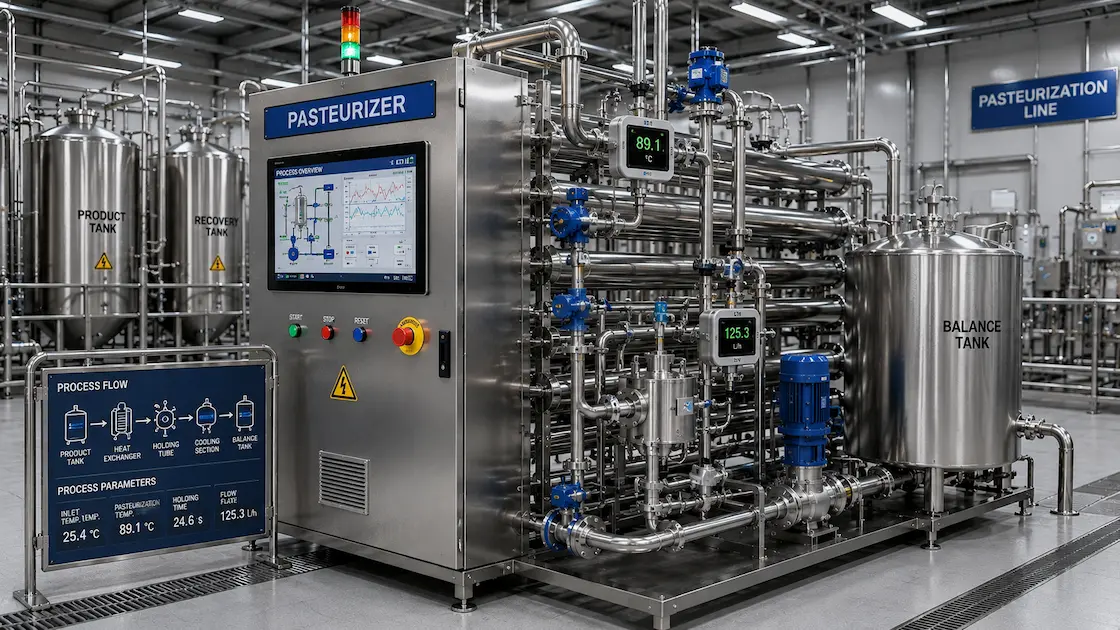
Quality Control and Process Supervision for the Food Industry
Sielco Sistemi —
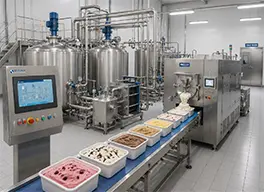
The production and storage processes within the food industry are subject to strict and constantly evolving regulations that define precise requirements for hygiene, traceability, and quality control. Meeting these requirements while keeping operating costs under control is one of the most demanding challenges facing food manufacturers today, particularly because quality control systems often require substantial capital investment and, if poorly implemented, can generate costly production downtime. The quality control system based on the Winlog Evo SCADA platform, developed by Sielco Sistemi, has been successfully applied across numerous sectors of the food industry, including dairy processing, beverage bottling, meat and poultry processing, bakery production, and packaged food manufacturing. By unifying data acquisition, process supervision, and reporting in a single SCADA software environment, the platform gives manufacturers the ability to comply with demanding quality control criteria while limiting both the installation investment cost and the production losses that are typically associated with deploying a new supervisory system on an active line.
Continuous, Real-Time Monitoring of Critical Process Variables
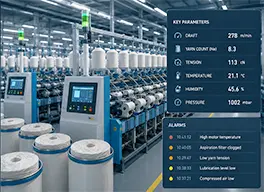
At the core of the system is the continuous monitoring of every significant variable involved in the production process: temperature, humidity, pressure, flow rate, pH, conductivity, and any other parameter that can influence the safety or quality of the finished product. Field data is acquired from PLCs, sensors, and industrial controllers — including Siemens SIMATIC S7-1500 based control architectures — and consolidated in real time within the Winlog Evo environment. This continuous, automated supervision removes the need for manual data logging, reduces the risk of human error, and ensures that every stage of the process is traceable and auditable, in line with the principles of Hazard Analysis and Critical Control Points (HACCP) and other internationally recognized food safety frameworks. Because the system is built on an open and scalable SCADA architecture, it can be deployed on a single production line or extended across an entire plant without requiring a redesign of the underlying automation infrastructure.
Quality Control Reporting and Production Lot Certification
One of the most valuable outputs of the system is its ability to automatically generate quality control reports with graphical trends for every batch produced. These reports document, with time-stamped precision, how each monitored variable behaved throughout the production cycle, providing objective, data-driven evidence that a given production lot complies with the quality standards required by current food safety legislation. Rather than relying on spot checks or paper-based logs, plant managers and quality assurance teams gain access to a complete digital record that can be archived, retrieved, and presented during internal audits or regulatory inspections. This level of documentation not only supports regulatory compliance but also strengthens a brand’s ability to demonstrate due diligence to retailers, certification bodies, and end consumers, reinforcing trust in the safety and consistency of the final product.
Storage Process Monitoring and Product Integrity
Quality control does not end once a product leaves the production line. The system also continuously monitors the storage process, certifying that warehousing and conservation conditions — temperature, humidity, and other environmental factors — do not affect the quality of the stored product or cause any modification of its original characteristics. This is particularly critical for perishable goods, refrigerated products, and items with strict shelf-life requirements, where even short excursions outside the approved storage range can compromise safety or shorten usable life. By logging storage conditions with the same rigor applied to the production phase, the platform extends full traceability across the entire supply chain, from raw material intake through to the point of distribution, giving manufacturers verifiable proof that products have been preserved correctly at every stage.
Automatic Alarm Management and Remote Notifications
Any abnormal condition detected during either the production or the storage process is identified immediately and signalled through a local alarm, allowing operators to intervene before a deviation can compromise product quality or safety. This proactive approach to alarm management reduces the likelihood of an entire batch being rejected and minimizes waste, which directly contributes to lowering overall production costs. In facilities that operate in an unattended environment — such as during night shifts, weekends, or in remote storage sites with no permanent on-site staff — the system can automatically send an SMS notification to the cellular phone of a maintenance operator on call. This ensures that critical anomalies, such as a refrigeration failure or a parameter drifting outside its set tolerance, are addressed promptly even when no one is physically present at the facility, protecting both the product and the investment in raw materials already committed to the batch.
Centralized Access via Local and Remote Client Stations
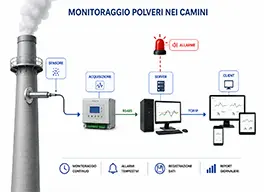
All information generated by the system — process data, historical trends, quality reports, and alarm logs — can be made available simultaneously to one or more client stations, whether located on the same local network or connected remotely through a standard TCP/IP protocol. This architecture allows production supervisors, quality assurance managers, and corporate decision-makers to consult up-to-date information from different locations, including from corporate offices physically separate from the production plant. The ability to distribute information across multiple stations also supports multi-site organizations that need a consistent, centralized view of quality performance across several facilities, without duplicating hardware or software licenses for every monitoring point.
A Scalable, Cost-Effective Path to Food Industry Compliance
Taken together, these capabilities make the Winlog Evo SCADA platform a comprehensive answer to the quality control challenges faced by modern food manufacturers. The system combines continuous process and storage monitoring, automated batch certification through detailed reporting, proactive alarm management with remote SMS notification, and flexible local or remote access via TCP/IP, all within a single integrated software environment. This combination allows companies operating in the food industry to meet strict regulatory quality control requirements while containing both the initial investment cost of the system and the indirect costs linked to production downtime, helping turn regulatory compliance into a manageable, sustainable part of everyday plant operations rather than a recurring operational burden.
FAQ
- How does a SCADA system improve food quality control?
- SCADA continuously monitors temperatures, humidity, pressures and process variables, ensuring traceability and compliance with HACCP requirements.
- Can refrigerated storage areas be monitored?
- Yes. Winlog Evo SCADA continuously supervises storage conditions and generates alarms and reports to preserve product quality.
- Which food processes can be supervised?
- Dairy, beverages, meat processing, bakeries, packaging and cold storage facilities can all be monitored through SCADA.
- Does the system support Industry 4.0 integration?
- Yes. Winlog Evo SCADA integrates with PLCs, MES, ERP systems and SQL databases.
- Can alarms be sent remotely?
- The system can automatically send SMS and notifications to maintenance personnel to minimize downtime.