SCADA for wind farms: wind turbine data, monitoring and supervision
Sielco Sistemi —
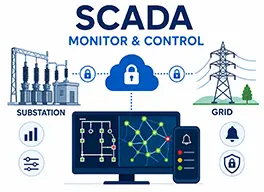
A wind farm SCADA system collects, displays and archives the operational data produced by every turbine on a site, replacing dozens of disconnected local controllers with a single point of supervision. As installed wind capacity keeps growing worldwide, according to the International Energy Agency, operators increasingly need software that turns scattered turbine signals into an actionable, real-time picture of the whole plant. Winlog Evo, developed by Sielco Sistemi, is a SCADA platform built to unify turbine data, remote monitoring, alarms and reporting in one environment that scales from a handful of machines to a large wind farm.
SCADA data for wind turbines
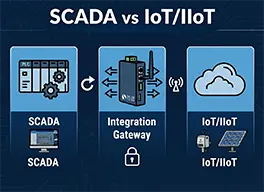
A wind turbine SCADA installation gathers a wide range of signals from every machine: active and reactive power output, wind speed and direction at hub height, rotor RPM, pitch and yaw angle, nacelle orientation, gearbox and generator temperatures, vibration levels and brake status. This wind turbine SCADA data typically reaches the control room over industrial protocols and, increasingly, standardized interfaces such as IEC 61400-25 or OPC UA, alongside classic fieldbuses; Winlog Evo supports a broad range of communication drivers so that turbines from different manufacturers and vintages can be polled through one consistent architecture instead of separate proprietary tools.
Because a wind turbine is a mechanically complex asset operating in a harsh, variable environment, the quality and completeness of the acquired data matters as much as its quantity. Structuring tags consistently across every turbine, tagging each signal with engineering units and scaling, and validating sensor ranges at acquisition time all reduce the risk of silent data gaps later, when engineers need reliable history to explain an underperforming machine or justify a warranty claim to the turbine supplier.
Wind monitoring and production
Beyond individual turbines, an effective wind SCADA deployment also tracks the resource itself: met-mast readings, ambient temperature, air density and turbulence intensity all influence how much energy a site can realistically produce. Continuous wind monitoring lets operators compare each turbine’s actual output against its expected power curve for the current wind speed, quickly flagging underperformance caused by blade icing, pitch misalignment or sensor drift long before it shows up as a meaningful revenue loss. Aggregated across the farm, this same data supports the production statistics referenced by organizations such as the International Renewable Energy Agency when assessing national and global renewable output.
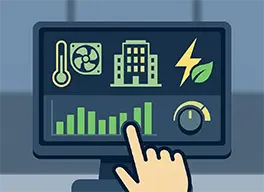
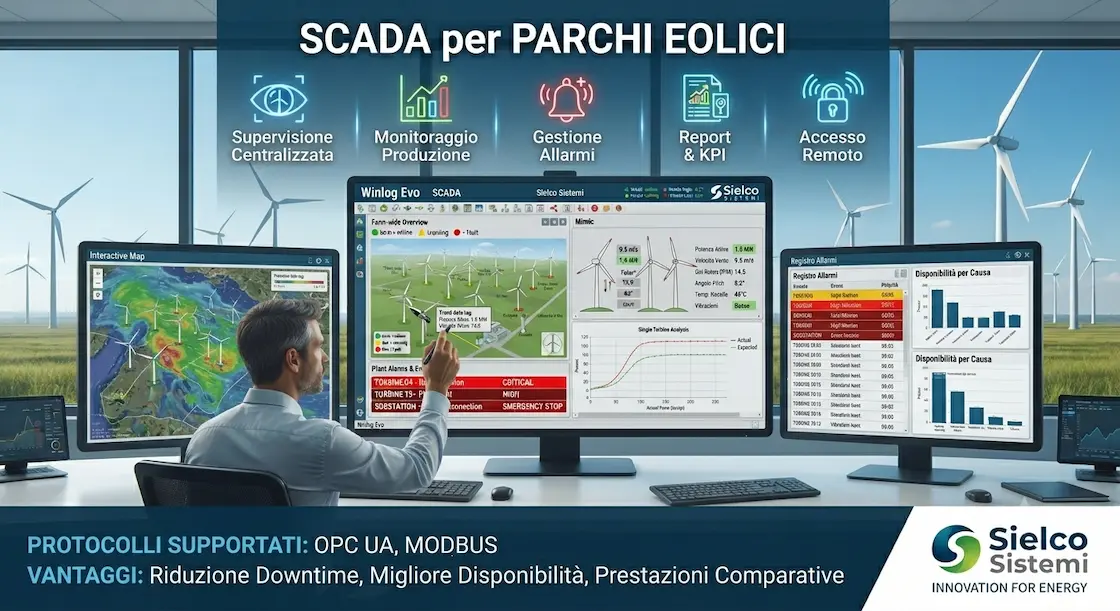
Production monitoring in Winlog Evo also means giving different users the view they need: a technician benefits from a single-turbine mimic showing live wind speed, power curve and status, while a plant manager needs a farm-wide summary of total generation, availability and curtailment. Building both from the same underlying SCADA wind turbine database avoids duplicated configuration effort and keeps every dashboard consistent with the same source of truth.
Plant alarms and events
Wind turbines fail in specific, well-known ways, and a SCADA system’s alarm configuration should reflect that: overspeed, gearbox and generator overtemperature, excessive nacelle vibration, pitch or yaw faults, grid disconnection, and emergency stops are among the events that demand immediate operator attention. Prioritizing these alarms correctly, so a genuine safety trip is never buried among informational messages, is one of the most valuable configuration exercises a wind farm operator can carry out, and it directly affects how quickly a fault is diagnosed and cleared.
Every alarm and operator action should be written to a complete, searchable event history, since this record is what lets maintenance teams reconstruct the sequence leading up to a trip and lets management verify contractual availability guarantees with turbine suppliers. Remote notification is equally important for wind assets, which are often unmanned and geographically dispersed: automatic SMS or email alerts let on-call staff respond to a critical alarm within minutes rather than waiting for the next scheduled site visit, cutting the time a turbine spends offline.
Reports and performance analysis
Turning historical data into decisions requires structured reporting: availability, capacity factor, mean time between failures, downtime by cause and energy delivered per turbine are the core metrics most operators track over daily, monthly and yearly periods. Because Winlog Evo can write process history directly to a standard SQL database, these reports can be built with familiar query and business-intelligence tools rather than a proprietary export format, and the same data can feed contractual availability calculations shared with asset owners or turbine manufacturers.
Comparative performance analysis across turbines within the same farm is often the most actionable output of all: ranking machines by capacity factor or downtime highlights which units are systematically underperforming their neighbors under the same wind conditions, pointing maintenance teams toward the specific turbines, and often the specific components, that deserve inspection first. Over time, this turns a wind farm SCADA deployment from a monitoring tool into a continuous improvement process that measurably reduces downtime.
Want to see wind turbine monitoring, alarms and reporting configured in practice? Try the Winlog Evo web demo, review the supported communication drivers, or contact Sielco Sistemi for guidance on your project.
FAQ
- What data does a wind farm SCADA system collect from each turbine?
- It typically gathers active and reactive power, wind speed and direction at hub height, rotor RPM, pitch and yaw angle, nacelle orientation, gearbox and generator temperatures, vibration levels and brake status, usually via industrial protocols or OPC UA/IEC 61400-25 interfaces.
- How does wind monitoring help detect turbine underperformance?
- By comparing each turbine’s actual power output against its expected power curve for the current wind speed, SCADA can quickly flag underperformance caused by blade icing, pitch misalignment or sensor drift, long before it results in significant revenue loss.
- Which alarms require immediate attention in a wind turbine SCADA system?
- Overspeed, gearbox and generator overtemperature, excessive nacelle vibration, pitch or yaw faults, grid disconnection and emergency stops are among the events that demand immediate operator attention and should be prioritized above informational messages.
- Why is remote alarm notification important for wind farms?
- Wind turbines are often unmanned and geographically dispersed, so automatic SMS or email alerts let on-call staff respond to a critical alarm within minutes rather than waiting for the next scheduled site visit, cutting the time a turbine spends offline.
- What performance metrics should wind farm reports track?
- Availability, capacity factor, mean time between failures, downtime by cause and energy delivered per turbine are the core metrics, and ranking turbines by these figures highlights which units are systematically underperforming and deserve inspection first.